Tuesday, September 17, 2019

How Dry I Am

In the frosty North I suffered during long winters from skin on my legs and arms so dry it itched and flaked despite my best efforts to moisturize. Nosebleeds were common and usually poorly timed – as I was walking out the door, late for an appointment. Lips chapped and cracked, even after applying candlewax-like amounts of Chapstick, and my scalp shed snow in direct proportion to that falling outside.
And then summer provided temporary relief.
Here in Florida there is a different hydrating challenge. There is an intense heat and humidity during southern summers that ratchets up your body’s natural cooling system to little effect. You sweat profusely. A short walk with the dog leaves you glistening within about ten minutes, and suffering from “swamp ass” (yeah, gross but it happens) after twenty.
I’ve heard it said that if you want to better understand how it feels down here, take a long hot shower, then put on your clothes without drying yourself off. Multiple daily clothing changes are routine no matter how little you wear. Long pants or sleeves feel like the chemical hot packs you might carry to football games in a Green Bay winter.
Extended time outside requires sunscreen of course. The sun feels like molten copper, blanketing your head and shoulders with the broiling intensity of a Weber grill. And you’re the meat. But the other danger is rapid dehydration.
Our bodies are made up of approximately 60 percent water. Losing ten percent of that amount results in physical and mental deterioration. So you can survive fluid loss via perspiration much longer than the equivalent rate of blood loss.
A good sweat is something for which we enter a sauna or steam room. It’s therapeutic and invigorating when the duration is controllable and optional. But venture outside during August in Florida to do some yard work as I did recently, and it quickly becomes clear that your body’s attempt to cool you requires lower ambient humidity and a nice breeze. The amount of sweat developing on your forehead isn’t readily apparent until you touch it with a swipe of a finger. It then coalesces like the condensation on a cold bottle of beer, cascading and rolling in a gathering wave, surfing toward your eyebrows and spilling onto both sides of your eyeglasses.
Dehydration sneaks up on you, leaves you feeling depleted for the rest of the day, and can cause leg cramps overnight. How do you know you’re headed for a literal melt down? The obvious clue is your t-shirt. There aren’t just embarrassing little patches of darkness under your arms, around your neck and down your chest and back. Your shirt has changed color. Whatever it was before, the entire thing is a dark shade of that color now.
A bit later your hands begin to shrivel. They look like you’ve been soaking in a hot tub for an hour, all prune-like and resembling your ancient aunt Edna’s fingers, through no fault of her own, on a normal day. Pinch the skin on your arm between thumb and forefinger and you’ll notice that it molds like PlayDoh, not bouncing back to its original shape. And eventually, if you lean over to pick a weed, when you stand up, the world begins to spin. The dizziness is a result of low blood pressure. You probably didn’t notice, but your body quit producing urine more than an hour ago. Now you’re headed for heat stroke, and for that there is one treatment: go inside and drink water.
Carrying a large water bottle postpones the above effects, but even several bottles into this experience I’ve found that I have limits, and have staggered into the house in surrender more than once. Along with water, you’re shedding electrolytes that help your tiny sub-cellular mechanisms continue operating. You need to replenish those too. The makers of Gatorade profess that their product helps with this, but studies don’t support the claim. I’ve even heard that football players drink pickle juice, but I have no idea if that’s true.
During a recent visit, my son regularly went for one-hour runs. Even if I could run, I wouldn’t do that. He came through the house, leaving a mop-worthy trail of sweat behind him and then jumped directly into the pool, appearing somewhat frantic. My Haitian neighbor once asked me why I was working outside in the middle of the day. I had no good answer. Lack of experience?
So, why would anyone live in a Godforsaken Hellscape like this? The answer requires a certain amount of gloating about our endless summer, the more pleasant version between November and May, that we get to enjoy when northerners are staying hydrated by taking out the garbage, causing the water in their veins to form ice crystals that time-release moisture back into their organs. This assumes that they haven’t fallen on the ice and broken a hip or had a heart attack shoveling wet snow. Their skin is another story.
You might consider becoming a “Snowbird” if you have the means, enjoy paying two of every bill, and feel like starting up, shutting down and worrying about two properties. It is estimated that 80 percent of residents along the Southwest Gulf of Florida are transitory. But if you stay all year you get to enjoy lighter traffic, available seats in restaurants, and a perpetual thirst that had best be taken seriously. Pickle juice, anyone?

Friday, September 6, 2019

Time Flies

It was almost four years before I retired when I downloaded a countdown app and entered a date on my iPhone. The number was around 1400 days. Sometimes I would check the app daily. Other times a week would go by before taking a look. But the number dwindled at a painfully slow rate. It seemed as if it would be forever before I left my desk for the last time, looking down the hallway I’d traversed for 27 years. I imagined there would be tears in my eyes, the same ones that caused my eyes to brim with moisture when my first child got on the bus for kindergarten. Wait, absolutely not. Nothing like that! I would head off with the closest approximation of skipping that my petrifying body could muster and never look back. I would become young again, live an active lifestyle, lose weight and do all those things I’ve been putting off for lack of time.
1399
1398
1397
Well, imagine my surprise when I recently discovered that the app is still running on my phone. At some point I reset the text it displays to reflect the date we moved to Florida, our retirement destination. And here it is:


I did not fear retirement, I longed for it. But even while ticking off days to that eventual goal, I had a nagging feeling that I was also counting down the days of my life. What if I didn’t make it? What if something horrible, counting down on some unanticipated app loomed menacingly between now and then? What if my wife developed an aneurysm and needed brain surgery at day 1030 (she did, and she’s fine). And ultimately, whatever the days would bring, they were days that I only got to live once. And here I am with 2237 days less than I had way back when I started counting (1400 plus 837).
We all have a timer relentlessly ticking off the days we have left on Earth. It’s best to make the most of them. Live each day without regard for the number of days until Christmas, the end of school or a nice vacation. There’s no guarantee that waking up today is repeatable tomorrow. Counting them is just, well, a waste of time.

Thursday, December 13, 2018

The Christmas Letter

Many of us receive them, and some of us write them. But with the advent of social media, haven’t they become obsolete? I’m referring to the annual written summary of the year gone by, stuffed into Christmas cards with perhaps a photo or two.

These missives are generally a single page document, though I recall one example of a fascinating family with so much news to share that it occasionally spilled over onto a second, third and *gasp* fourth page. But besides length, the format and content vary widely, and can even be squeezed onto the back of a Shutterfly photo card using a four point font.

I feel that human attention spans being what they are, especially at this busy time of year, anything that requires investment of time should be limited to one side of a single page, preferably double-spaced and using a minimum of a 12 point font. If you’re more interesting than that, you’re probably on the local news.

Technology has had a major impact on this tradition. Why use ink, paper, envelope and a postage stamp when the document can be sent as an email attachment in the blink of an eye? Perhaps the fear is that it’s too easy for the receiver to say, “Oh, it’s one of those” and unceremoniously hit delete. Paper really gets in your face, takes its place on the kitchen counter, and gives you an extra reason to take out the recycling.

We generally set letters aside and read them well after the holidays. Or at least we did in Illinois, when a snowy day was conducive to sitting fireside in your pajamas until noon, sipping endless coffee and reading stacks of pages that were rushed to the post office before Christmas.

Rather than a point-by-point detailing of every time you left the house during the year, related chronologically and with accompanying photographs, I feel that “This Is Us” publications should be loaded with humor, hopefully self-deprecating, succinct and categorized by person, with perhaps two or three sentences each.

It’s demoralizing to get to the bottom of page one and realize that it’s still February, your cousin’s neighbor’s wife is thinking about planting petunias this spring, and shopping for Easter bonnets has begun in earnest. No, newsworthy items should be limited to nuclear family unless said in-law won the Nobel Prize (though that would be on the news, so never mind.)

Which of the following two paragraphs would you more enjoy reading?

We spent Spring break in Tucson this year. The temperature was in the mid 70s and the humidity was quite low. Each day we arose shortly after sunrise and had breakfast of scrambled eggs, sausage and toast on the patio, which is delightfully constructed of bluestone shapes that resemble a puzzle pieced together. After breakfast we went for a walk.

Or

So, there I am grilling dinner in near darkness on the patio, when I turned to go into the house for a plate. As I stepped on a misplaced bungee cord, thinking it was a rattlesnake, I suffered a full body clench that caused me to lose my balance and tumble into the screen door. Being somewhat more massive than the door, I proceeded to tear it from its track, buckle the aluminum frame and collapse its entirety around my body like a toga, which I wore while laying sprawled out on the dining room floor.

Now, both of these actually happened many years ago. I never included either in the Christmas letter, but I think I should have. The second is a continued source of laughter for my now adult children, who witnessed the event and have shared it with friends in several countries.

We rarely do anything worth bragging about. We can be proud of degrees earned, children born, marriages and really interesting vacations. But I have noticed on occasion a not-so-subtle spinning of facts, or omission of glaring truths while recounting the year that was.

For instance, getting a job at Denny’s is hardly “Bentley endeavored to secure a management position in the food service industry.”

Or, “Leroy applied to Harvard where he hopes to pursue a PhD in romance languages,” when in fact he squeaked into a community college to brush up on his French and keyboarding skills. 

And 

Hey, where did that baby come from?!

So, this is not my annual Christmas letter. It’s a bonus. The other one is on the computer. We need to buy printer ink, paper and stop at the post office to get stamps. With any luck it will go out mid-March. Until then, I’ll see you online!

Merry Christmas! I am so looking forward to reading your letters. No, really!


Tuesday, September 4, 2018

Half Time

Little Midge Wilkins sat on a folding chair in the intense late morning Manahatchee sun. Or whatever tourists called this place now. The street was quietly busy, and her hopes grew for a successful sale.
Momma glanced upward from the clothesline, shading her eyes. Not a cloud, nor a bird. Not like remembered con-trails crisscrossing a dreamlike periwinkle sky, silently heading to exotic destinations. She suddenly flinched and self-corrected, provided silent inward chastisement and dropped her head in shame from her useless thoughts.
“Days is all mixed up, they are,” she said, and returned to her wet sheets and undergarments. Light that reflected from swaying clothing shimmered in the blistering breeze, played across her face and arms, mocking her attempt to dry the laundry before the middle time. It would take the second morn as well, and she knew it.


To read the rest of this story and more than fifty others, please consider buying "Natural Selections," at Amazon.com.


Wednesday, July 25, 2018

To Science

Paneling and bookcases muffle all sound except a ticking clock. I stare upward and wait. A stain on the ceiling looks like my Uncle Otto.
“I know I’m not crazy,” I say finally.
The couch is comfortable, but lying down feels awkward, like most picnics.
“Who said you’re crazy?” replies David. He insists that I call him David. Maybe so I’ll feel more relaxed.
“No one, actually, it’s just that things aren’t making sense. Or making too much sense.”
“And how does that make you feel?” he says, glancing at his note pad, ready to write.
“Please don’t say that. It’s so dumb”
“Then how do you suggest I find out how you’re feeling?”
After a brief pause I say, “I feel like an observer of my own life. Like I’m acting out a script. Or like I’m making everything up as I go along. Like it’s not real. Like I’m dreaming. How’s that?”
“Well, that would be classic depersonalization disorder, but let’s explore a bit further, ok?”
“Sure. Let me ask you this. How many coincidences does it take to screw in a light bulb?”
David looks up, puzzled.
“You know, before the little cartoon idea bulb appears over your head.”
I tilt my head to the right and look directly at David. “Metaphorically of course. Remember, I’m not crazy.”
“Go on,” he says, and smiles.


To read the rest of this story and more than fifty others, please consider buying "Natural Selections," at Amazon.com.


Sunday, July 22, 2018

Intrusion

She was drifting off to sleep, thoughts of the day swirling into dizzying random images like chocolate into cake batter, when she sensed a presence. Through closed eyes, one or more red digits on the bedside clock flicked the silent passage of one minute, and then the next. The subtle change in brightness was magnified through her eyelids by the contrasting blackness of the room. She dared not look for fear of what she might or might not see. A specter, a watcher was in the room, lurking in the darkness, and there was a childlike safety behind her tightly shut eyes akin to pulling the covers over her head. She was paralyzed.

Her heart pounded as she considered her options. The iPhone on the nightstand was within reach, but may as well have been miles from her grasp. The red glow from the clock’s display would betray her as her arm crossed the gulf between the mattress and the wooden surface. She heard breathing.

Tiny incremental movements, too small to be detected, could bring her closer to the edge of the bed over a period of time. But then what? The unseen enemy had the high ground. Even a sudden lunge would put her at a clumsy disadvantage.

A scream would be of no use, just a trigger for attack and a pathetic surrender of her last breath. Frank slept like a stone beside her. Waking him would be difficult judging by the depth of his slumber. He was more helpless than she was. And how would she reveal the threat without movement or sound?


To read the rest of this story and more than fifty others, please consider buying "Natural Selections," at Amazon.com.


Thursday, July 19, 2018

Uptown 8

Denny pulled on a heavy fiber rope that dangled from the ceiling. He pulled again, more forcefully this time, but still without the expected result.

“Back up a little,” he said to Aaron.

The eight year old sprang to the far end of the hallway in an exaggerated leap from danger.

“Where does the secret door go?” he asked his Dad.

“It’s just the attic buddy,” said Denny.

One additional forceful pull broke the seal on at least two coats of paint. The attic had not been used within Aaron’s lifetime at least. Another tug and the folded up stairway opened like a jaw with the screeching noise of an expanding set of rusted springs and a cascade of dust. Denny unfolded the stairs and pressed against them with his boot to secure the bottom edge against the hallway carpet.

“Ready?” he asked.

Aaron nodded and smiled.


To read the rest of this story and more than fifty others, please consider buying "Natural Selections," at Amazon.com.


Thursday, June 28, 2018

No Limits

Tommi believed she could do anything, and had set out at age eighteen to prove it. As her mother taught her, “Life is short and the world is large.” And with this in mind, she found herself on a mountain road in Japan headed for the secluded Hotel Omodaka. It was the next thing on her list. Not a bucket list. She hated that term. It was so…finite. A beginning that ended with kicking the bucket. Not her. She simply kept a “life list” and grew it daily. “She who dies with the longest list wins,” she told friends. “Do as many as possible. No limits”
“Visit a hot spring in Japan” was her current undertaking. The logical next item was “Learn Japanese.” But being reasonable with her goals, Tommi did not set out to master the Japanese language. Any amount would do.
“Kon'nichiwa,” she said many times since arriving in Tokyo, but quickly realized that English would not be an impediment on her journey. Still, it was fun practicing the language, and the smiles it evoked among new friends along the way suggested that her American accent was both amusing and welcome. Arigatō was polite in any tongue.
The timing of her current endeavor left something to be desired, but it was too late to change her plans now. Winter in Japan was not unlike winter in Michigan, the place she originally called home. Moving to Key West had slowly changed her. Acclimating to a different climate was not something that happened quickly.


To read the rest of this story and more than fifty others, please consider buying "Natural Selections," at Amazon.com.


Tuesday, June 26, 2018

It's Your Mother

Estelle, if that was really her name, fell asleep facing the window in her darkened bedroom in Minooka, Illinois. Flashes of light and distant thunder comforted her as it had when camping as a child. Nylon tent walls protected her then from the wind, rain and falling branches of an approaching storm with the illusion of safety. How different really were glass and vinyl siding to a limb with bad intentions? The lightning was intense and strangely colored, hypnotic and terrifying. She closed her eyes and drifted off to sleep.
She awoke to footsteps and the sound of a clearing throat.
“It’s your mother, Estelle,” said the man whose name was Greg. He handed her a cell phone.
Her first instinct was to scream, but the scene seemed so surreal as to be dreamlike. Instead, Estelle lay terrified, frozen as she had been as a twelve year old with night terrors, paralyzed. But now she was a single adult whose mother had been dead for years. She played along, assuming she would wake from a lucid dream and make sense of everything.
A man was in her room, at her bed, handing her a phone as if it was the most natural act in the world. Her dead mother was calling. Perhaps she had lapsed into a coma, or died, been reincarnated, or suffered a brain-scrambling stroke. But everything she sensed told her otherwise. It was reminiscent of her college philosophy course when the challenge was issued to prove that life was not a dream.
She reached for the phone, staring silently at the man.
“Are you ok?” he frowned, concerned.
Estelle nodded and took the phone.
“Momma?” She whispered into the phone.
“Oh, sweetie, you haven’t called me that in years. How are you?”
Estelle, whose name was Cindy, wanted to cry, sitting up and swinging her legs off the side of the bed, dropping her feet to the floor. The voice was not her mother’s.
“I’m. I’m. How’s Dad?” she probed as casually as she could.
“Oh, I think he’s out mowing the lawn, last I checked.”
Cindy’s father died five years before her mother. Who were these people, and why did they think she was Estelle?


To read the rest of this story and more than fifty others, please consider buying "Natural Selections," at Amazon.com.


Thursday, January 18, 2018

The Green Flash

I spent a month studying dolphins in Hawaii during 1983. This is an experience I partially documented in a blog titled, The Dolphin is Also a Fish part one and part two.

There is nothing quite like Hawaii. The weather is consistently wonderful, a tropical mix of rainbows and sunsets, fragrant flowers and ocean views like nowhere else, certainly not in the United States. In preparation for my trip I purchased a decent 35mm Canon camera with a couple of lenses, one of which had a nice zoom. This was back in the days of film, a medium that resulted in cost-conscious photography, a conservative philosophy practiced by amateurs who were not provided unlimited film by kindly managers. (this is a tribute to myself given one member of my Facebook audience.)

In those days you shot a roll of 36 exposures and then headed to a photo lab and forgot about it for a while. Perhaps the next day you stopped by to pick up your prints. Longer if you were busy building sand castles or scrubbing the inside of a dolphin tank with those green scrubby pads many of us use in kitchen sinks. Disgusting.

Anyway, my camera was mostly manual. F-stop, exposure, all that good stuff. And with those settings pre-determined, I set out to take a picture of something I had heard about prior to my trip. The green flash.

The green flash is a phenomenon you can look up on the internet if you’re really curious. There is even a restaurant named in its honor. Suffice it to say, when the sun dips below the horizon on an evening when atmospheric conditions are favorable, precisely when the edge of the solar disc appears to become extinguished by the ocean, a tiny green luminous blip of green light appears for about one second. It is understandably hard to capture without perfect timing.

So I patiently watched the sun drop slowly toward the water’s edge against an orange tapestry of a sky. Waiters traversed the beach with trays of tropical drinks as music wafted out of waterside restaurants toward my position on the beach. As the time grew close, I raised my camera and tweaked the focus just a bit. My right index finger rested on the shutter release. My left hand supported the long zoom lens. Down the sun went, in an arc that we know as time, relentlessly ticking off seconds, and then…click, whir, snap. I took the shot.

I thought I saw a green dot on top of the sun, but it was anyone’s guess as to whether my timing was correct or if my camera was up to the task. I simply said, “Hmmm” and walked away.
I dropped the film off at the lab and went about my business, then returned the next day. When I approached the counter and told the tech my name, he turned and pulled the envelope containing my prints out of a bin at the back of the lab, paused in his stride back to the counter, looked straight into my eyes and said, “You got the green flash!”

Now, I hadn’t mentioned this when I dropped off the film, so I was completely surprised by my accomplishment, and also by his intimate familiarity with my photos. I guess processing film all day left one wanting for entertainment.

So, next time you’re fortunate enough to watch the sun go down against a distant horizon, see if you can spot this subtle but fascinating effect. It’s no erupting volcano or spectacular lightning flash, but it’s pretty cool to say you've seen it. I put it on my bucket list and immediately checked it off.


Sunday, December 31, 2017

Black Dogs


A personal study once led me to conclude that black dogs are the best. This update makes a case for including other colors.

 In 1958 my great uncle Otto found us Rusty, an unkempt brown cocker spaniel who spent his formative years chained to a tree in a distant front yard. I was about four years old, but I can remember Rusty being tied to a steel support column in our basement, where he affirmed my parents' belief that he got his name by leaving rust-colored stains on the tile floor, the living room carpet, or anywhere else he had a chance to pee. He did not understand “Stay!” and ran away every chance he got. 

My dad was not an athletic man, and the fastest I ever saw him move was running after Rusty up our driveway at full throttle into our neighbor’s backyard graduation party one early June afternoon. He muttered a number of things when he brought Rusty back to our house, literally at the end of his rope. We had Rusty for less than two weeks. 

Our next dog was Rebel. It was a big name for a toy poodle who looked his shaggy best just before a periodic topiary haircut turned him into a living French evergreen. He was neurotic but loving, a total lap dog we bought as a puppy. A puzzled aunt once commented, “What’s wrong with his little pink tongue?” when Reb sat throwing her kisses from across the room, licking her face from afar. He turned gray and died at the age of ten, just as I turned twenty. He was my first dog-bro.

Yankee (do you see the creative pattern here?) was acquired at no charge from a farmer whose black Lab and Collie got together and had love puppies. He was a dust-covered ball of long black hair that chased tolerant but annoyed horses around their pasture and was thrilled to come home and be my friend for four short years. He slept outside the door of my room, ate furniture, aluminum chain link fence filler strips, and giant rawhide bones. My frightened grandmother held him at bay with her cane until the day I suggested she cautiously hand him a Milkbone. That was the beginning of his weight-gaining period. She had the same effect on me. It was her way of showing love.  


Yankee was an undisciplined runner and not much of a bodyguard. Sadly, he took a tumble down a flight of outdoor wooden stairs and injured his spine. 

After a month of medication to rest his paralyzed back legs, I had to make one of the hardest trips of my life—wearing very dark sunglasses. 

I came home and wrote the following poem.


No way to make him understand

The legs that numb behind him drag

Up to the feet of master-man

His eyes are sad, his tail wags.


How do you tell a four-year-old

Who loves but never learned to talk

That life is over, all is told

A final meal, a final walk.


And choking now gives way to tears

Decision made, how long I wait

His final moments feel like years

And leave me here to contemplate.


Some hastened words, fluorescent glow

"Inject, dispose, cremate, decay"

A signature, a check, and go

Back home to put the toys away.


Our next dog came after a long hiatus and with the advent of kids. Jett was black too. Jet black. A sad-eyed orphan found on the streets of Waukegan, he was a complete but extremely well-behaved mess who cleaned up into a handsome young man-dog. He spent eleven years with us, filling every moment of our family life with a presence that lived on in happy reminders and left us wishing for another friend this good. He took his last breaths while I laid beside him on the floor and comforted him. He seemingly waited for our daughter to rush home from college to say goodbye and for everyone to go to bed as if it was then okay to go. I carried him to the vet the next day, carefully wrapped in a little brown blanket. Another of the most painful memories of my life. 

Jett had a “cousin” named Mo. He was a large black Lab who visited us with his “Mom” and Dunkin Donuts on weekends. You felt safe when he was around because he looked like a panther but would submit to lesser dogs, and was no protection at all. He was a good boy who asked little and gave much. My wife accompanied her sister the night he left us in a room filled with love and tears.

On a lighter note… I eventually found a dog I did not love. He lived next door to the house we eventually moved away from, and was a true sociopath, like his owner. Unlike his tan, fuzzy next-door neighbor across the street who looks skyward and happily chases airplanes, Buster chased ducks, killed raccoons, and dragged a dead baby skunk into his house. He was a hunting dog living in the suburbs. He ate my pond fish, dug holes in our yard, chewed up our aluminum downspouts, and stared crazily at us through our living room window. He was insane. He was not a black dog. 

But then our son bought a dachshund puppy while he was in the Peace Corps in Guatemala. The dog’s name is Griffey (after a favorite baseball player), and we first met him via Skype. He cost 1000 quetzals, which sounds like a lot of money. In Guatemala, dogs don’t get much respect. They are utilitarian for the most part, serving as guard dogs. Griffey looked like a burrito when my son held him up for viewing, and was completely cute. He speaks Spanish and is brown. He changed my mind. When we vacationed in Guatemala we of course stayed with our son. That meant sharing flea-infested quarters with Griffey, who wanted nothing more than to snuggle up next to us while we slept but was literally covered with crawling, blood-sucking insects. The poor little guy was repeatedly sent away from our beds to a patch of concrete floor until he quit trying. He remained in Guatemala and went on to father six pups with another dachshund down the road. They are adorable.


And this brings us to the latest members of our family. His first is named Toby. Our daughter went with us to the local shelter called Orphans of the Storm while on a break from school. We intended to “just look.” As Melissa strolled ahead of us past a cage with a brown and white Jack Russell Terrier/Dachshund mix, the little guy practically threw himself on his back for a belly rub and won her heart. We rushed back on a lunch hour the next day to make sure nobody else adopted him. We didn't realize that everyone in the world except us knows about the Jack Russell's high-energy reputation and there was no danger of him going anywhere quickly. His adoption papers stated "Can't Keep" as his reason for being at Orphans. He’s been with us for about ten years now. He is a constant challenge. Smart, high energy, and a completely alpha male, he makes us laugh, keeps us on our toes, and is so territorial that not even birds flying overhead go unannounced. I guess he's Jett's younger brother.

And that would mean that Lennon is Toby's nephew. This handsome young Golden Retriever is living in Illinois, much too far away but frequently showing up in cute photos and videos on our phones. He has an amazingly human personality and a sweet disposition. Named after John Lennon by his Beatles super-fan Mom, he sheds enough to keep the family warm in winter. He recently graduated from his first obedience class.


And surprise! Suddenly Lennon has a little brother named George. We can only hope that four Beatles does not lead to four dogs. They are insanely cute together. Lennon acts more like George's Mom than his brother. He is beyond tolerant, and look at them! What a great pair, and have both grown to ninety pounds. They are the source of endless cute dog pictures.


Next came Matti, the Little-Big-Dog who has visited us multiple times. He now resides in Mexico. The cutest little ball of fur ever, he plays with Toby while at our house, leading him on chases from one room to the next and eventually hiding in small, safe spaces. He even took a stroll across the pool cover, barely bending the plastic surface at only four pounds. His Dad cuts his hair, especially when it covers his eyes or attracts spiky seeds after long walks with his Mom.


Finally, Mo's younger "brother" has found a place in Wisconsin, a place of many more storms than you would think unless you're afraid of thunder and know better. Bandit is a black and white two-year-old Border Collie mix who loves rabbits and squirrels and sometimes snoozes on his back. He likes belly rubs and kisses. He is super smart. He also enjoys peanut butter dog cookies.


So given recent developments, I have to say that all dogs are best. And it really isn’t about color or even the animal. I really believe that dogs are inherently good creatures. Owners create bad dogs and bad behavior. It’s not the dog’s fault. 


 😎


If you like fiction and you're in the mood for over 50 short stories, please consider buying "Natural Selections," at Amazon.com.


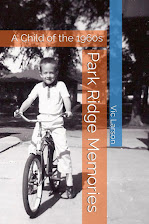
Or if you'd prefer seventy non-fiction stories inspired by my home town, please consider buying Park Ridge Memories also on Amazon.


Friday, November 17, 2017

Getting High

Imagine that you’ve never seen an object farther away than 100 yards. No satellite photos, images from airplanes or views from skyscrapers looking down with a heavenly perspective on the world below. It’s just not part of your experience. You are a Mayan, and you live 1000 years ago in a dense jungle on the Yucatan peninsula.

I have looked out over New York City from the viewing deck of the Empire State Building. Chicago is a surreal wonder from the top of the Sears Tower (now Willis) or the John Hancock building. I’ve flown over the Badlands of South Dakota, and crested the ridge of a dormant volcanic peak on Kauai in a helicopter. But none of these compares at a fundamental level to another elevated experience I had in Mexico.

You see, I stood on top of the massive pyramid called El Castillo located in the Mayan ruins of Chichen Itza, several hours by bus from Cancun. The area thrived from around 600 A.D. to the 1200s, hidden away in the Mexican jungle until restoration began in the 1920s.

At 98 feet in height, El Castillo is barely as tall as a ten-story building. But the Mayans were small in stature, and lofty in their dreams of reaching the sky like the Tower of Babel. They were also more astute in the engineering of a method less fraught with risk than the wax wings of Icarus.

El Castillo
We were among a number of other fortunate visitors in 2003 to be among the last to scale the front face of the mighty Mayan temple. In 2006 the site was closed to climbing after a woman fell to her death. Unlike contemporary stairs, with treads of about 10 inches and risers less than seven, the daunting ascent up El Castillo requires that the foot be placed on a narrow tread of perhaps 5 inches, with a rise of just over ten. There are only 91 steps up the side of the first 79 feet. It is the Stairmaster of the modern world, and also one of its seven wonders. It is quite steep.


The Rope up the Stairs
Walking up the pyramid was generally accomplished with the aid of a heavy hand-held manila rope to steady the climber. This resulted in a ski-lift appearance to observers from below and a single-file ascension by most. The return down was a more hair-raising experience, often completed in a slow seated crab crawl, inching down face first one step at a time, or retreating backward on hands and feet, leaning forward toward the structure to mimic the angle of the pyramid’s face. Walking down upright was an errand for fools or fourteen year olds.

At the top the successful climber was greeted with a breathtaking view of the surrounding jungle. The clear air allows for viewing in all directions above tree top height and for many miles. I can only imagine that the comparatively primitive people, with their somewhat claustrophobic world-view, would have felt like gods, or near to them. The bright sun, the strong breeze and the incredibly massive stone underfoot all contributed to the feeling of literally being king of the hill.

At the Top
The small square stone temple at the top has a spiritual quality that causes some to speak in whispers. It is unknown what went on here, or who was allowed the privilege of visiting the space.

But I mentioned fourteen year olds. As we were taking in the wonder of the temple, assessing and procrastinating our eventual climb down with a newly discovered fear of heights, the alarm went up from our son. It may have been the watermelon he indulged in earlier that day. Perhaps a careless drink of unsterilized water during the same time period. In any case it was Montezuma’s revenge (an Aztec, and much later). He had to leave. Now.

Certain bodily urges are great motivators. Diarrhea is a humbler of all mankind. It gets the clock ticking triple time and is both heartless and relentless. Our son proceeded to plummet down the face of El Castillo as if it were an escalator at Macy’s. We watched in horror as he sped down the deep and miniscule steps, flying past amazed and bewildered people, pausing to catch their anxious breath and contemplate the number of remaining stairs in their own journeys. His gate was not unlike a top-hatted Fred Astaire, sidestepping his way down a staircase on stage, positioning his feet to land fully on each step instead of landing and balancing only on his heels. We held our breath and prayed he wouldn’t fall. Ninety-one steep stone stairs is a horrific, unsurvivable tumble, with nothing to disrupt momentum once set in motion.

He made it to the open field at the base of the pyramid and just kept going. He knew that somewhere there must be a porta-potty. Buses of tourists demand such conveniences after a three hour ride. We saw his now tiny image from on high, scampering like an insect, zig zagging across the field until he disappeared into a blue phone booth marked “Men.”

A happy ending was had by all. It was an excellent and memorable adventure that may be lost forever in the future. Scientists have discovered a massive sinkhole beneath the pyramid, capped by 16 feet of limestone that is slowly dissolving. The Earth reclaims what man has wrought, slowly in our fleeting existence, but swiftly on the scale of time.


Saturday, November 11, 2017

Ginkgo Day in the Time of Thanksgiving

First, a little history: The Ginkgo tree is native to China and has been widely cultivated. It has resisted evolutionary change for approximately 270 million years. That’s why it is considered a “living fossil.” There are male and female Ginkgo trees (dioecious), with the female producing a fruit that smells horrible when it falls and decomposes. The leaves of these trees are fan shaped, a very distinctive appearance often reproduced by artists as design elements of all kinds. Each autumn, the Ginkgo is known to shed all of its leaves within a period of several hours on a day in late October or November, depending on location and weather.

We had a male Ginkgo in the back yard of our last home. We called the annual leaf drop, “Ginkgo Day.”

Gingko With Leaves
Gingko After Leaf Drop
I’m not sure what year we first noticed the Autumn behavior of our little tree. I distinctly remember looking out a window that faced our back yard one windless November morning and seeing its bright yellow leaves falling like rain, covering the ground around the trunk with multiple layers, like a heavy golden snow. By the time I got home from work that day the tree was completely bare, not a leaf left on any branch. I have included a short video here of a less spectacular leaf drop, but one that yielded the same results in 2015.


I began tracking the date of Ginkgo Day on our calendar. In Lincolnshire, Illinois the date ranged from November 8th to the 27th over a period of about ten years. One year a particularly severe and early hard freeze caused the leaves to drop while still green in color, but still within the confines of a work day. Ginkgo Day was not ruined, it was just different that year.


It got to the point that I started an office pool, offering a prize for the person who correctly guessed the date of the leaf drop. As I recall, no one guessed the exact date, but someone came close. I posed the same challenge on Facebook, with similar results.

In 2012, Ryerson Nature Center near our home hosted a lecturing botanist by the name of Peter Crane. Sir Peter Crane, mind you, knighted in 2004 and a member of the Royal Society in London. I’m not sure why he became so distinguished, but the dude had his Ginkgo on, and sold copies of his book Ginkgo, The Tree That Time Forgot, which he dutifully autographed for me.


During the question portion of his lecture, I commented on what I’d observed, and that I’d made a game of it. Was this just our tree, or a known characteristic of the genus? He smiled as I described the office pool and commented that the University of Wisconsin at Madison had done something similar. Yes, it was a known quality.

Linnaeus may have named and described the Ginkgo in 1771, but others like myself, in our admiration for our beloved Ginkgo later documented this behavior.

We have since moved to Florida and left our special tree behind under the care of strangers who may or may not be aware what a unique specimen they have on their property. As much as I would love to grow a Ginkgo at our new home, from what I’ve read it will not survive in this climate. So while we no longer have an object of our singular focus, we’ll amuse ourselves with the variety and splendor of the local flora. I’ve often commented that we now live in Jurassic Park. The Ginkgo and alligators have that much in common.